
How teams lay out a fleet, in practice.
We are early enough that there are no named customers to show you yet, so these are deployment profiles instead: anonymised, representative, and written out with the fleet size, the carriers, the plan mix and the thing that actually changed.
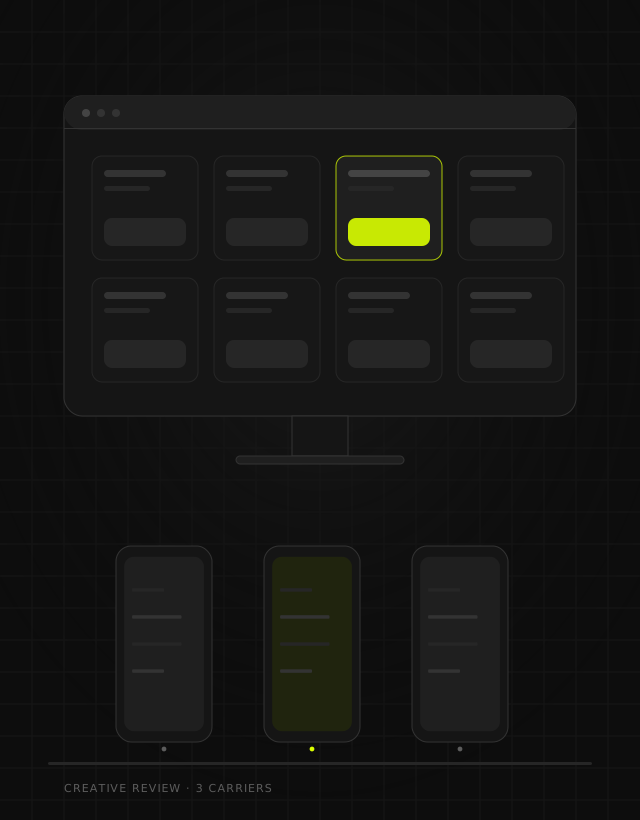
An ad verification agency, 24 devices, three carriers
They sell proof that a campaign ran where it was booked. Everything about that job depends on the check leaving from the same kind of connection the audience is on.
Twenty four phones in one office, split across three national carriers, all on the Farm Plan. Two proxy endpoints per device so the crawler and the screenshot service never queue behind each other.
They were buying residential gigabytes at roughly twelve dollars each. Mobile placements either failed to serve or came back with the desktop creative, and every disputed report turned into an argument about whether the check itself had been valid.
Checks now leave from the carrier the campaign was booked on. Timed rotation cycles each device between sweeps, and a gateway denylist keeps the crawler on the domains that are actually under contract.
A month of flat per device billing lands near what one heavy week of gigabytes used to cost, and disputed placements stopped being about the proxy.
A price monitoring team, 40 devices, two carriers
They track shelf and travel prices for a category their customers buy in daily. The interesting movement is in the deep pages, which is exactly the part a metered bill discourages you from reading.
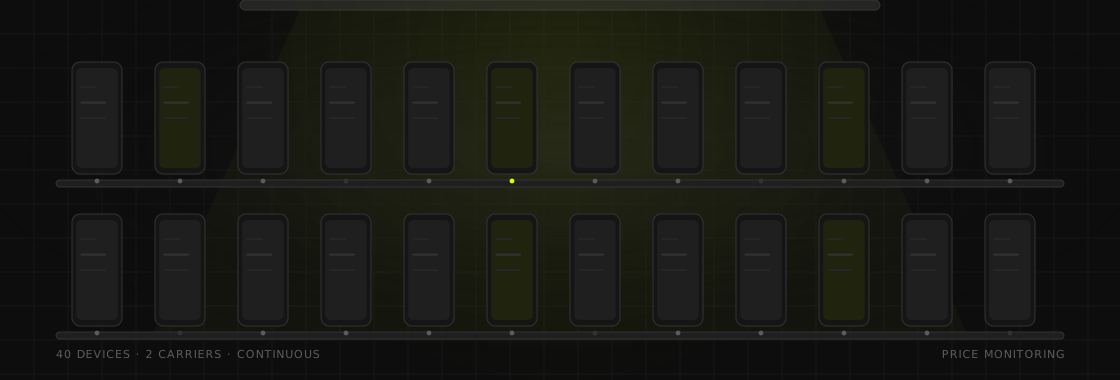
Forty devices on two racks, twenty per carrier. The Grower Plan on the crawl fleet, the Farm Plan on the six that also capture screenshots. Unlimited bandwidth on every one of them.
A per gigabyte contract meant the crawl schedule was set by finance rather than by the data. Deep category sweeps were always the first thing cut, which is where most of the interesting movement lived.
Turbo mode on the whole fleet. The fetch goes out over the SIM and the response comes back over WiFi, roughly four times the throughput at half the cellular data.
Sweep frequency went up several times over while the monthly bill stayed flat, because the bill counts devices and not bytes.
A two person growth team, six storefronts
Small fleet, low traffic, and the requirement is stability rather than throughput. Every account needs to sign in from the same place it always has.

Six devices, six SIMs, one per storefront they operate. Farm Plan throughout: the traffic is light, but the codes have to reach their tooling without anyone reading a screen.
A shared residential pool meant a sign in could arrive from a different city every week. Roughly every second login triggered a verification code, and somebody had to walk over and read it off a handset in a drawer.
One device per account, so each account keeps a stable carrier IP with a history that belongs to it alone. A webhook posts incoming codes straight into their internal tool, signed, the moment the phone receives them.
Verification became a step in a script instead of an errand, and login friction stopped appearing in their weekly notes at all.
A mobile QA group inside a fintech, 12 devices
Their release quality problem was not the code. It was that nothing in the test environment resembled the networks their customers were standing on.
The suite ran over office WiFi, so a whole class of defects only appeared after release: carrier grade NAT breaking a callback, an IPv6 only stack in one market, timeouts that only happen at the network edge. Datacentre proxies reproduced none of it, because a datacentre is not a carrier.
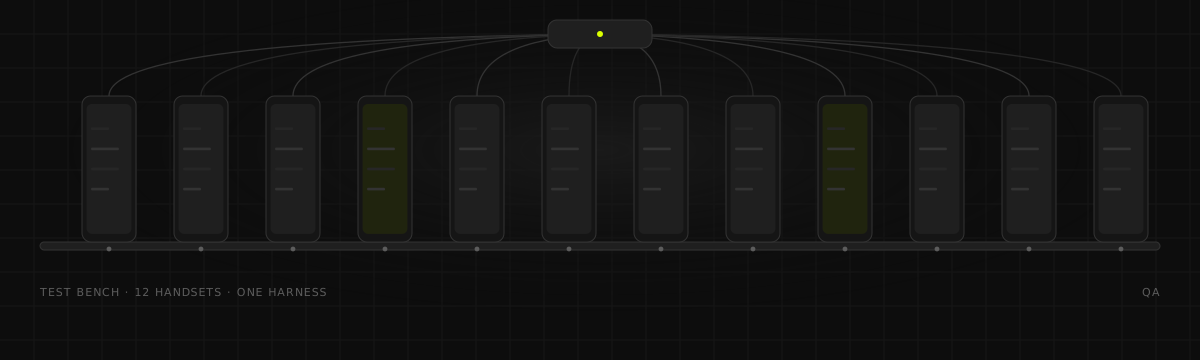
Every carrier they support has a phone paired to it. A CI job points at that device's SOCKS5 port and the run happens over the real network. Battery, success rate and live connection telemetry sit beside the results, so a flaky run gets attributed to the right cause.
Network specific bugs now surface in CI rather than in support tickets. Their own estimate is most of a release cycle of firefighting, moved earlier.
Tell us the shape of yours.
If one of these looks close, the useful next step is a short call where you describe the real thing: how many devices, which carriers, what the traffic does all day, and where it has to come out. We will give you a number, and we will tell you plainly if this is the wrong tool for the job.
Talk to salesStart with one phone, not a fleet.
Free 7-day Farm Plan trial, no credit card. Grow into one of these shapes once the numbers hold up.